
 Attractions
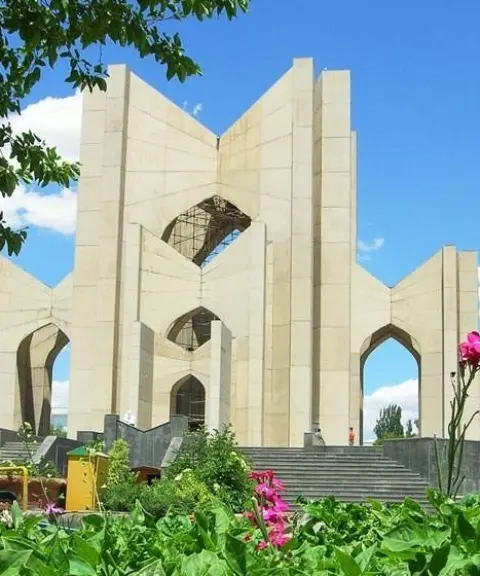
Imamzadeh Seyyed Hamzeh
A historic shrine in the Sarkhab neighbourhood of Tabriz
- Attractions
- East Azerbaijan, Tabriz
- Altitude 1,408 m
- Ability level Beginner
Ability level:
Beginner
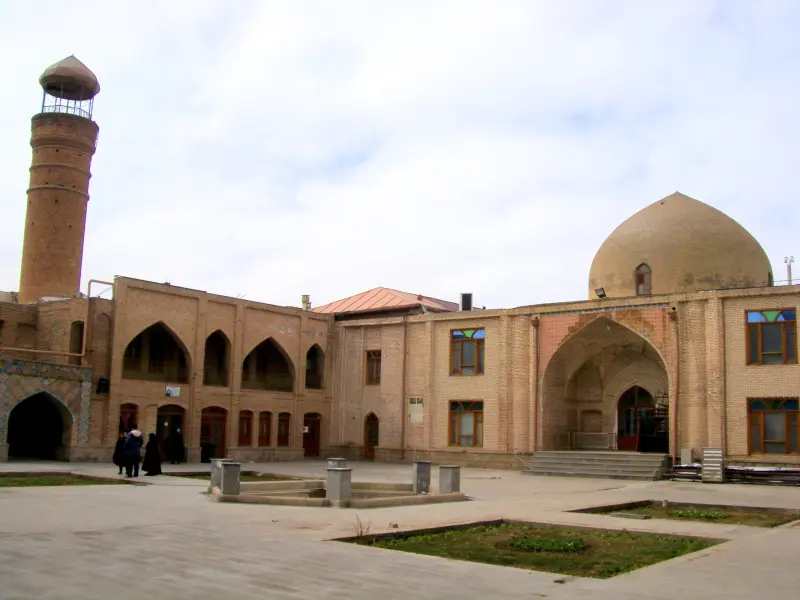
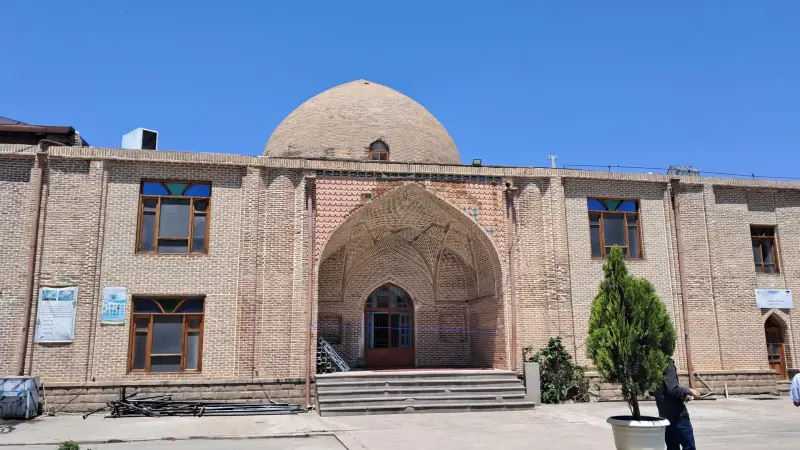
Imamzadeh Seyyed Hamzeh is one of the best-known historic shrines in Tabriz, in East Azerbaijan Province. It stands in the Sarkhab neighbourhood, on the southeast corner of the intersection of Seqat ol-Eslam Street and Aref Street, right next to the Maqbarat o-Sho'ara (Mausoleum of Poets). Over the centuries the shrine has been one of the important religious sites of Tabriz, and it is still visited by pilgrims and used for religious and ceremonial gatherings. The complex includes a courtyard, a domed chamber, the Seyyed Hamzeh Mosque, the Zahiriyeh Madrasa, cells (hujras) and service areas, and it has been restored and rebuilt in several historical periods. According to available information, the original shrine was built in 714 AH (lunar Hijri) by Seyyed Hamzeh's son, Seyyed Hossein, after his father's death, although sources disagree about the date of Seyyed Hamzeh's death. Its location beside the Maqbarat o-Sho'ara also gives the shrine a special place among the cultural and religious attractions of the historic quarter in the north of Tabriz.
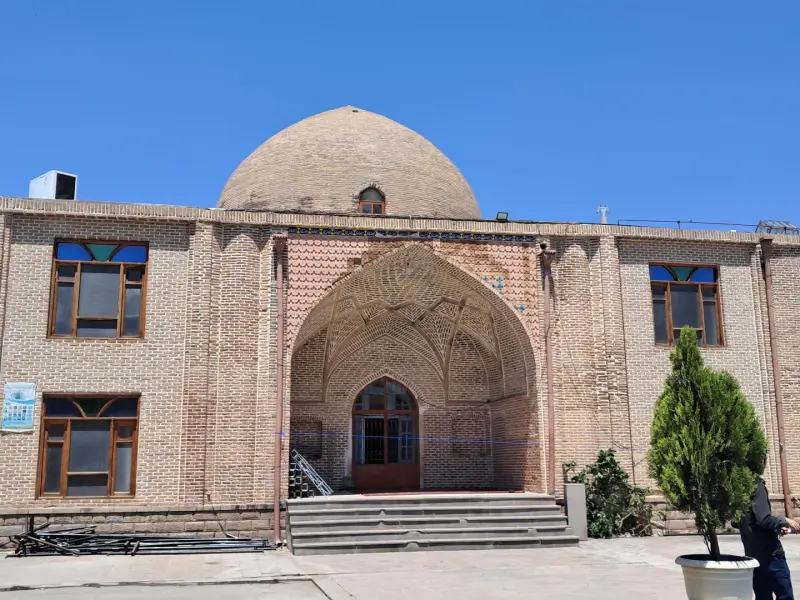
One of the most notable features of Imamzadeh Seyyed Hamzeh is its combination of architectural elements and decoration from different historical periods. The fairly large courtyard is given over to the tomb and domed chamber in the south, and to the madrasa and cells in the north and east. The main entrance is on the south side, through a portal with a marble arch. On the front of the portal, inscriptions in thuluth script and religious phrases are carved in stone, and on the east side of the entrance there is a marble inscription from the Qajar era recording the restoration of the building ordered by Naser al-Din Shah and carried out under the supervision of Haji Rostam Beyg. The domed chamber lies in the southeast part of the courtyard, and its interior is decorated with mirror work, muqarnas and Quranic inscriptions. The mirror work around the tomb was done in 1313 AH (lunar Hijri), and parts of the interior decoration have been restored in recent times. The domed chamber contains a Qajar-era mihrab with muqarnas and stucco work, above which a portrait of Seyyed Hamzeh and his son can be seen. The crypt of the shrine lies about two metres below the level of the domed chamber and holds the main grave of Seyyed Hamzeh and the graves of some of his relatives. The shrine complex also contains monuments and memorials to religious, political and cultural figures, which add to the historical importance of the site.
To reach Imamzadeh Seyyed Hamzeh, take Seqat ol-Eslam Street and Aref Street in the Sarkhab neighbourhood of Tabriz. The shrine stands next to the Maqbarat o-Sho'ara, and since it is within the city, it can be reached by both public transport and private vehicle. The best time to visit is outside prayer times and religious ceremonies, so that tourists do not interfere with the worshippers' devotions. On religious occasions and special days, the complex may also be crowded with large numbers of pilgrims. Visitors should dress appropriately for a religious site and take photos of the interior without disturbing worshippers and pilgrims. Given the building's historical value, responsible visiting means not touching the decoration, inscriptions or old surfaces, keeping quiet in the prayer areas, and avoiding any damage to or alteration of the site.
Written by زهرا لنگری Last updated
Activities
What you can do here, and what it takes
-
Walking
پیادهروی و گشتوگذار در محدوده تاریخی سرخاب و اطراف مقبرةالشعرا را میتوان همزمان با بازدید از امامزاده انجام داد.
Specifications
Introduction of the location and specifications of Imamzadeh Seyyed Hamzeh
Location:
East Azerbaijan, Tabriz
Coordinates:
38.08391548, 46.30286240
Open in maps
Height above mean sea:
1408 meter
Transports:
Private car, Minibus, Bus
Native Languages:
Turkey
Tourist Attractions in Tabriz
Attractions that are nearby
Qajar Museum
Province East Azerbaijan
- Walking
A story of Qajar splendor in the heart of the Amir Nezam Mansion in Tabriz
Sarraflar House
Province East Azerbaijan
- Walking
A showcase of pottery art and authentic Qajar architecture in Tabriz
Tabriz Pottery Museum
Province East Azerbaijan
- Walking
A showcase of the art of pottery in a historic house
Parvin E'tesami House
Province East Azerbaijan
- Walking
The house museum of Iran's great woman poet in Tabriz
Kabud Mosque of Tabriz
Province East Azerbaijan
- Walking
The Turquoise Jewel of Iran's Islamic Architecture
Related tags:
Unfortunately, no comments have been registered.