
Reference The most complete and authentic Blog related to mountaineering and rock climbing
Search for:
Types of Mountaineering Backpacks
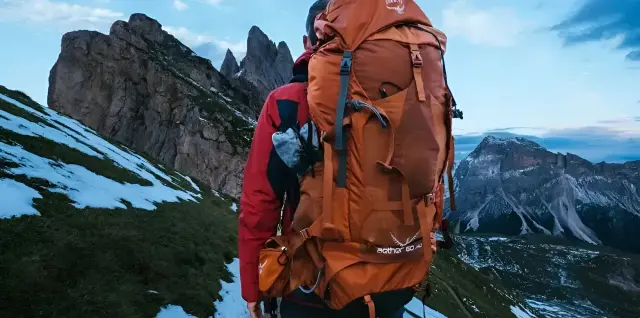
Hiking Backpack Buying Guide: Key Tips for Choosing the Best Model
If there is one piece of gear in mountaineering that directly affects your comfort, your energy and even your safety, it is without doubt your hiking backpack. The wrong pack can quickly lead to fatigue, shoulder and back pain, and even reduce your balance on difficult routes.
A proper, well-designed pack, on the other hand, distributes the weight correctly and lets you cover the trail with more energy and control. Choosing a backpack is not just buying a piece of equipment; you are defining your style of moving in the mountains.
Table of Contents:
Types of hiking backpacks
Why does choosing a backpack matter?
Popular brands and models
The right backpack capacity
Key features of a good backpack
Common mistakes when choosing a backpack
Conclusion
Frequently asked questions
Types of hiking backpacks
Hiking backpacks are divided into several main categories based on how they are used and how long your trip is. Choosing the right type of pack is the first step toward a comfortable experience in the mountains.
1. Small backpacks (Daypack)
These models usually have a capacity of 10 to 30 liters and are suited to day trips or light outings. Their low weight and simple design make them a comfortable choice for short routes.
2. Medium backpacks
Packs of 30 to 50 liters are used for trips of one to two days. These models have enough space for extra clothing, food and essential equipment.
3. Large backpacks (Backpacking)
Packs of 50 liters and above are designed for multi-day or professional trips. These models have a more advanced carrying system and distribute the weight better across your body.
Why does choosing the right type of backpack matter?
Choosing the wrong backpack means either your gear won't fit properly, or the pack will be too heavy and hard to control. Every trip has its own suitable pack, so before choosing, you need to define what kind of trip you are planning.
Popular hiking backpack brands and models
Choosing a reputable brand is very important when buying a hiking backpack, because it directly affects comfort, durability and safety. Brands such as Osprey, Gregory and Deuter are among the most popular options.
Backpacks for women
Osprey Aura AG 50: One of the best choices for women, with an advanced Anti-Gravity suspension system that distributes weight well and reduces pressure on your lower back.
Gregory Deva 60: A professional pack with a design shaped to fit the female body, offering good comfort on multi-day trips.
Osprey Eja 58: A lighter model for those who want to reduce pack weight on long trips.
REI Co-op Flash 55 (Women’s): A more economical option, lightweight with a simple but practical design, for medium and light trips.
Backpacks for men
Gregory Baltoro 65: One of the most famous models for carrying heavy loads on long, professional trips.
Osprey Atmos AG 65: A very popular model with excellent ventilation and weight distribution for hard, long routes.
Deuter Aircontact Lite 50+10: A sturdy pack suited to heavy trips, focused on durability and comfort when carrying a large load.
Osprey Aether 65: A classic and powerful option for professional multi-day mountaineering.
What is the right backpack capacity?
Pack capacity should be chosen based on the length of your trip and the type of equipment:
Trips of a few hours: 10 to 20 liters
Day trips: 20 to 30 liters
Light two-day trips: 30 to 45 liters
Multi-day trips: 50 liters and above
But capacity is not the only thing that matters; how you organize your gear also plays an important role. A small but well-organized pack can perform better than a large, disorganized one.
Key Features of a Standard Backpack
A good backpack isn't just for carrying gear; it should also support your body and distribute the load properly.
The most important features:
A back ventilation system to reduce sweating
Adjustable shoulder and waist straps for weight distribution
A hip belt to take pressure off the shoulders
Practical pockets with quick access
Water-resistant, abrasion-resistant material
A suitable weight for the pack itself
A good backpack should spread the weight across your shoulders, waist and hips, rather than putting all the pressure on your shoulders.
Why Is the Load-Carrying System Important?
If all the weight rests on your shoulders, you will tire quickly, and your balance on difficult trails may even suffer. A proper carrying system helps you conserve energy along the route and move more comfortably.
Common Mistakes When Choosing a Backpack
Many people, especially beginners, make mistakes when choosing a backpack that later cause problems on the trail.
The most important mistakes:
Choosing a backpack based only on looks
Buying a large backpack without a real need
Ignoring your body shape
Overlooking the ventilation system
Not trying the backpack on before buying
Choosing a heavy backpack even before filling it
Overfilling the backpack
Is a High Price Always a Sign of Quality?
Not necessarily. Some backpacks cost more simply because of the brand, yet they may not suit your needs. It's better to choose based on comfort and the type of trip, not just price.
Conclusion
In mountaineering, a backpack is not just a way to carry a load; it is one of your most important pieces of equipment and directly affects your comfort and performance. The right choice can give you a comfortable, safe experience, while the wrong one can affect your entire trip.
By understanding the types of backpacks, paying attention to the right capacity, checking the standard features and avoiding common mistakes, you can make a precise, well-informed choice.
Frequently Asked Questions
1. What capacity is suitable for a one-day hike?
A 20 to 30 litre backpack is usually the best choice.
2. Is a lightweight backpack better?
Yes, less weight reduces fatigue and strain on the trail.
3. How do I know if a backpack fits my body?
The weight should rest on your waist and hips, and the straps should be adjustable.
4. Does a backpack need to be waterproof?
Yes, it should either be waterproof or at least come with a rain cover.
5. What is the best brand of mountaineering backpack?
Osprey, Gregory and Deuter are among the most reputable brands.
6. Are women's backpacks different?
Yes, they are designed to fit the female body shape.
7. What kind of backpack is suitable for starting mountaineering?
Lightweight models such as the Osprey Eja or REI Flash are good options.