
Reference The most complete and authentic Blog related to mountaineering and rock climbing
Search for:
Flashlight
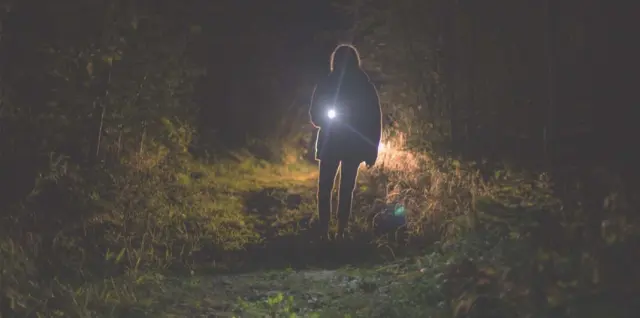
How to Choose the Right Flashlight for Camping
Although headlamps have become very popular, a flashlight is a good choice whenever you prefer a handheld light, for example:
When you need a powerful, portable spotlight.
When skill and precision in controlling the light are very important.
When you want to set the light down and aim it while you work on something.
For signaling.
Advances in LED (light-emitting diode) technology and battery efficiency have produced flashlights that are smaller, lighter and brighter than those of a few years ago.
Important factors in flashlights and headlamps
The main factors to compare when choosing a flashlight are:
Light output
Battery type and run time
Size and weight
Flashlight prices range from under $20 to over $200, yet the lights may be the same size. So what is the difference? Brightness is the biggest difference. More expensive flashlights are more powerful because they use more advanced bulb, battery and circuit technology. A flashlight will also cost more if it has a rechargeable battery and features such as impact and water resistance, protection against overheating and multiple lighting modes.
If you plan to buy in a store, check the following:
How is the light switched on and off? Does it turn on by itself inside your bag? Or, if you plan to use it in cold weather, can you easily switch it on and off while wearing gloves?
Is the flashlight powerful enough to get your jobs done? (Does it give enough light?)
Does it feel good in the hand?
Does it need a tool to change the battery?
Flashlight performance
The ANSI FL1 standards, introduced for flashlights in 2009, assure you that a flashlight has been tested and rated.
Compliance with these standards is voluntary and manufacturers carry out their own tests, but most brands today print the following performance figures on their packaging, including how the flashlight performs.
Light output
Light output is measured in lumens. It is a measure of the intensity of the light that comes out of the flashlight. The measurement is taken with the flashlight set to its highest brightness and fitted with new batteries.
Light output may be listed for each lighting setting. This is a common basis for comparison, but it does not tell the whole story about brightness. Beam intensity, distance and type all affect how effective a flashlight is. Light output can range from 20 lumens (suitable for reading a book) to 3,500 lumens, which is extremely intense.
Beam distance
Beam distance is measured in meters. It means how far the flashlight shines before the light fades to the level of the light from a full moon. The brightness of a full moon is enough for safe and careful travel outdoors.
Run time
Run time is measured in hours. It is how long it takes for the light output to drop to 10 percent of its initial level with new batteries.
Light output may decline gradually over time, or it may stay largely constant and then drop suddenly. Run time is usually given for each lighting setting.
A run-time graph, if available, gives the best picture of how the light performs over time.
Impact resistance
Impact resistance is measured in meters. For testing, the lights are dropped onto concrete 6 times from various heights. The test is meant to confirm that a flashlight that is dropped accidentally will still work. It is not, however, meant to show how well a flashlight withstands being hit by a heavy object or being used to strike other objects.
Water resistance
Water resistance is rated using the IPX system.
If you use a flashlight in rainy weather or near water, its resistance to water becomes important. Three ratings are used. An IPX4 rating is given after a splash test. This test is meant to confirm that the flashlight is water resistant from every angle. It also indicates the degree of water ingress.
_IPX7 Temporary submersion: up to 30 minutes at a depth of 1 meter
_IPX8 Submersion: up to 4 hours at a specified depth
For more on the technical aspects of lighting, read how to choose headlamps, or the article of recommendations from REI staff.
Additional features and performance
Some or all of these characteristics, which have no ANSI rating, will influence your choice of flashlight:
Bulb type
Advances in LED technology have made other types of bulbs almost obsolete. Filament bulbs, such as krypton bulbs, are still found in some flashlights. It is hard to beat an LED flashlight in energy efficiency, run time, impact resistance and lighting options.
Beam type
The lens reflector surrounding the bulb affects how the light is spread. Three common types are:
Flood (or fixed): A single beam width. Suitable for ordinary tasks around camp or while hiking.
Spot (or focused): A single narrow beam in the spotlight that lets it reach a long distance. This type is suitable for finding a trail or for other fast-moving activities.
Adjustable: The beam width varies from wide to focused. For example, a climber looking for the next slope should use a focused beam, but reading a map calls for a fixed, wide beam.
Regulated light output
Flashlights with a regulated power supply give steady, bright light for the whole life of the battery. At the end, however, the light output suddenly and dramatically drops. Unregulated flashlights start out bright and gradually dim as the battery drains.
Battery type
The type of battery and the availability of replacements are often a factor when choosing a flashlight.
Disposable: The most common battery sizes are AAA and AA, and they are easy to find. CR123A is also a common type, but it is more expensive and harder to find. Its higher output voltage suits lightweight flashlights and lets a flashlight with a small package produce a lot of light. Flashlights that use D cells are still available too, as long as you don't mind their size and bulk.
Rechargeable: Lithium-ion batteries can be charged through a USB connection from a computer, an AC or DC outlet, or a solar panel. If you spend a little more at the start and buy a rechargeable battery, you won't need to keep buying disposable ones.
Renewable: Flashlights with an internal battery that is charged through a solar panel are well suited to an emergency kit.
Caution: Do not use lithium or lithium-ion batteries in any flashlight unless the manufacturer recommends it. If a lithium battery is not compatible with the flashlight, the flashlight will be damaged.
Modes
One setting is enough for ordinary use. Some models offer two or more modes, such as low, medium, high and boost. You will probably rarely use more than one mode, but having the option of a powerful beam on demand can be reassuring. The brighter the mode you set the flashlight to, the shorter the run time. Some models may offer modes such as strobe or an SOS feature. User-programmable modes or mode sequences are a plus. This may be a feature built into the flashlight, or it may be set in software and loaded onto the flashlight through a USB cable.
Controls
The type of on/off button and brightness mode switch matters to some users. Push-button or slide switches are usually operated with the thumb.
A rotating bezel can also act as a switch, and it takes both hands to use. A safety lock feature prevents the flashlight from switching on accidentally and protects the battery from damage. Some of these flashlights have a tail-switch (clickless) function, in which the switch activates the light with lighter pressure, so you don't need to press a full click or release the switch to turn the light on. This type of flashlight can be turned off in any mode without twisting, which is a desirable feature in itself.
Materials and shape
The bodies of most flashlights are made of plastic or aluminum alloy.
A stainless steel head is meant to give greater resistance to impact. Not all aluminum bodies are the same: thinner bodies are lighter, and thicker ones are sturdier. Cylindrical bodies are the most common shape, but since they roll when placed on a surface, some models are designed to prevent rolling. In addition, the surface of the body may have a textured pattern to give a better grip and reduce slipping.
Size and weight
This is mostly a matter of preference. A bigger, heavier flashlight is not necessarily brighter, but because of its larger battery capacity it will probably stay on longer.
Accessories
Items that may be sold separately or included with the flashlight include a lanyard, a belt clip or leather case, and lens filters and light diffusers, which relate to the lighting.